Forumnyheter:

SMF - Just uppdaterat!

Visa inlägg

Denna sektion låter dig visa alla inlägg som denna medlem har skrivit. Observera att du bara kan se inlägg gjorda i tavlor som du har tillgång till.

Visa inlägg

Meddelanden - Strv102r

#1
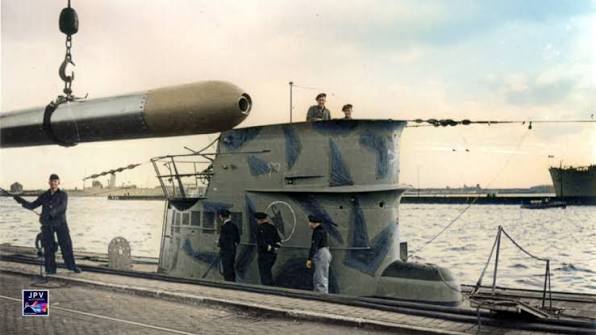
April 1940. Nu hoppas jag på en patrull i de norska farvattnen, men det blir de brittiska öarna igen. U-40 kommer fram tryggt.

I mörker träffar man på den lätta kryssaren Belfast på 10 000 ton med sin eskort. Är inte lätta kryssare i sig eskort?

Nåväl. U-40 kan inte motstå bytet utan anfaller i u-läge på medelavstånd med 4 st G7a varav tre träffar. Inga blindgångare. Overkillen tyder på att Belfast gick under på minuter med man och allt.
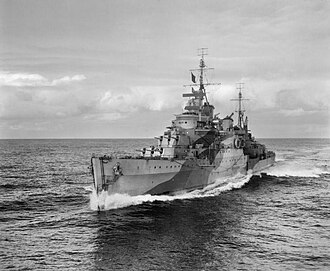


Commissioned in early August 1939 shortly before the outbreak of the Second World War, Belfast was initially part of the British naval blockade against Germany. In November 1939, Belfast triggered a German mine and, in spite of fears that she would be scrapped, spent more than two years undergoing extensive repairs.

Belfast returned to action in November 1942 with improved firepower, radar equipment and armour. She saw action escorting Arctic convoys to the Soviet Union during 1943 and in December 1943 played an important role in the Battle of North Cape, assisting in the destruction of the German warship Scharnhorst. In June 1944, Belfast took part in Operation Overlord supporting the Normandy landings. In June 1945, she was redeployed to the Far East to join the British Pacific Fleet, arriving shortly before the end of the Second World War. Belfast saw further combat action in 1950–52 during the Korean War and underwent an extensive modernisation between 1956 and 1959. A number of further overseas commissions followed before she entered reserve in 1963.


Eskorten hittar dock U-40 som får en träff, men den är ganska rejäl då en fjärdedel av manskapet dödas och del fjärdedel skadas lätt. U-40 går ner på stort djup och smiter undan.

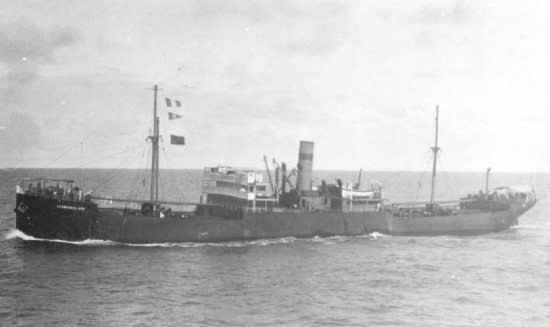
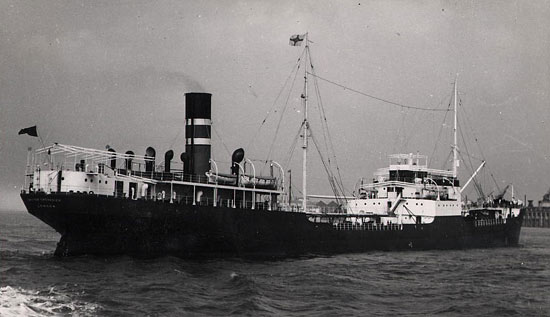
U-50 fortsätter patrullen och stöter på tankfartyget Ceronia på 8000 ton. Mörker. Kort håll. Ytläge. 3 torpeder G7a som alla träffar och inga blindgångare.
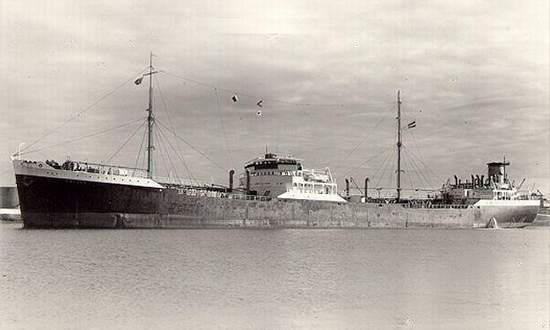


At 03.32 hours on 5 Feb 1940 the unescorted and unarmed Ceronia was hit by a torpedo, but made it to Rotterdam under her own power. The attacker must have been U-41, which was herself lost during a second attack on convoy OA-84 the same day.

Patrullen går vidare. I mörker möter man Baron Dechmont på 3700 ton i sällskap med eskort. Anfallet utförs på medelavstånd från u-läge med 4 st G7a (pga avståndet och den fortfarande ganska höga risken för blindgångare). 3 träff varav en blindgångare. Baronen sänks.
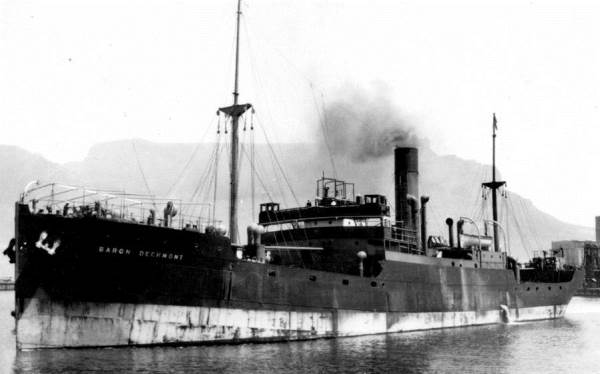


At 18.00 hours on 3 Jan 1943 the unescorted Baron Dechmont (Master Donald MacCallum) was torpedoed and sunk by U-507 northwest of Cape San Roque, Brazil. Seven crew members were lost. The master was taken prisoner and later lost when the U-boat was sunk ten days later. 28 crew members and eight gunners landed at Fortaleza.

Eskorten hittar U-40 och sjunkbomberna drar in två träff som slår ut 10,5 cm däckskanonen och dykrodren... U-40 manövrerar men kommer inte undan. Tre träff till. Skrovskada, ytterligare en fjärdedel av besättningen skadad, nu illa, och 20 mm lvakan slås ut. Det ser lite småpyrt ut, och när eskorten drar in en träff till på skrovet börjar chefen se lite mindre arrogant ut. Men så sjabblar eskorten och U-40 slinker undan.

Med minimal funktionsduglig besättning (nästan) fortsätter U-50. I dager påträffar man Aviemore på 4000 ton. Ytlägeoch kort håll. Patrullen närmar sig sitt slut och däckskanonen är utslagen. Det blir 4 st G7e. Bara en träff! Men den fungerar vilket bara 50% av G7e gör så här dags i kriget. Men det räcker visar det sig
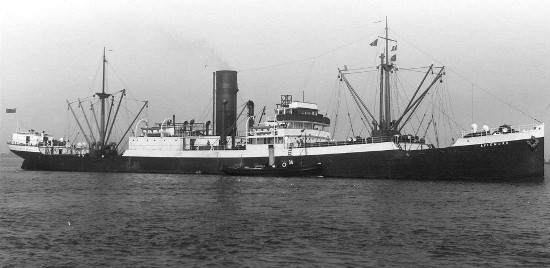


At 08.15 hours on 16 Sep 1939, U-31 fired one torpedo at the first ship in a convoy and saw it sinking after breaking in two. The Aviemore (Master Morton Forsythe) was in fact not part of the chased convoy OB-4, but was crossing ahead of convoy and sank immediately after being torpedoed about 220 miles southwest of Cape Clear. The master and 22 crew members were lost. Eleven crew members were picked up by HMS Warwick (D 25) and landed at Liverpool on 18 September. The Aviemore was the first ship sunk by an U-boat during an attack on a convoy in the Second World  War. The first successful attack on a ship in a convoy was made by U-35 when attacking convoy OA-7 on 21 September.

En sista möjlighet ges i slutet av patrullen när ett frakfartyg på 4600 ton påträffas i mörker. Alla kvarvarande torpeder avlossas, 2 G7e och 1 G7a. Bara en G7e träffar, och den är en blindgångare. Bara att bita i det sura jägaräpplet och segla hem.

En framgångsrik patrull trots skador. Chefen inkasserar eklöven till riddarkorset för Belfast.
#2
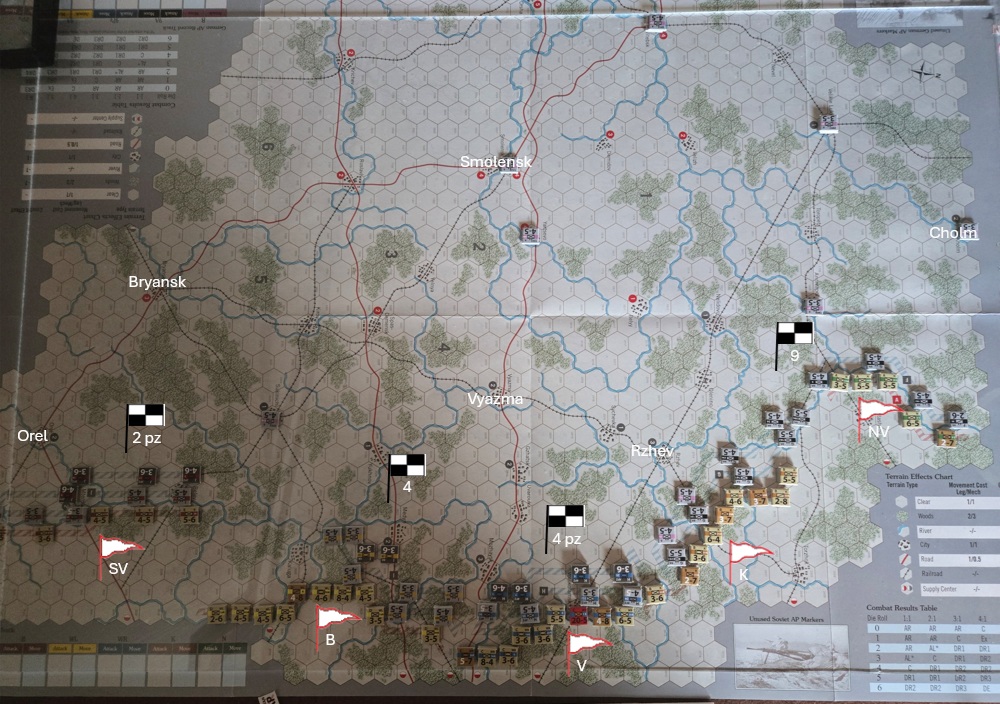
Förtydliganden

SV = Sydvästfronten
B = Bryanskfronten
V = Västfronten
K = Kalininfronren
NV = Nordvästfronten

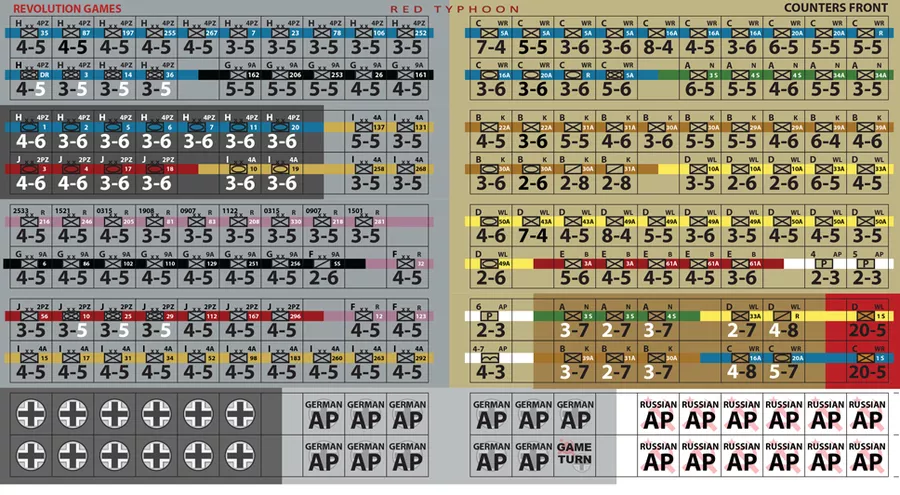
Var är 3 pansararmen? Var ju mellan 4 pansararmén och 9 armén under Taifun? När jag kollar borde den vara där nu också?

Google AI svarar:

In the board game Red Typhoon (published by Revolution Games and designed by Shigeru Hirano), the 3rd Panzer Army is missing and not included as a separate formation in the game. Wargamers and military history buffs who analyze the game have pointed out this specific omission. Historically, the 3rd Panzer Army fought fiercely on the northern flank of Army Group Center during this exact January 1942 counter-offensive, positioned right between the German 9th Army and the 4th Panzer Army.However, due to the abstract nature and scope of the Panzer Corps series system used in Red Typhoon. The designer consolidated or abstracted its constituent divisions into the surrounding German formations—predominantly under the operational umbrella of the 9th Army counters. If you are setting up the game or looking at the map, you won't find counters labeled for the 3rd Panzer Army. You will instead deploy and command the 9th Army, 4th Army, 4th Panzer Army, and 2nd Panzer Army to hold the line against the Soviet onslaught.

#3


Dukning klar. Norr är åt höger så klart.
#4
Andra världskriget / SV: Replay av GMTs The Hunters
26 augusti 2026 kl. 22:15:25
Februari 1940 bär det av till sjöss igen. Åter är de brittiska öarna målet för patrullen. Ditresan går smärtfritt.

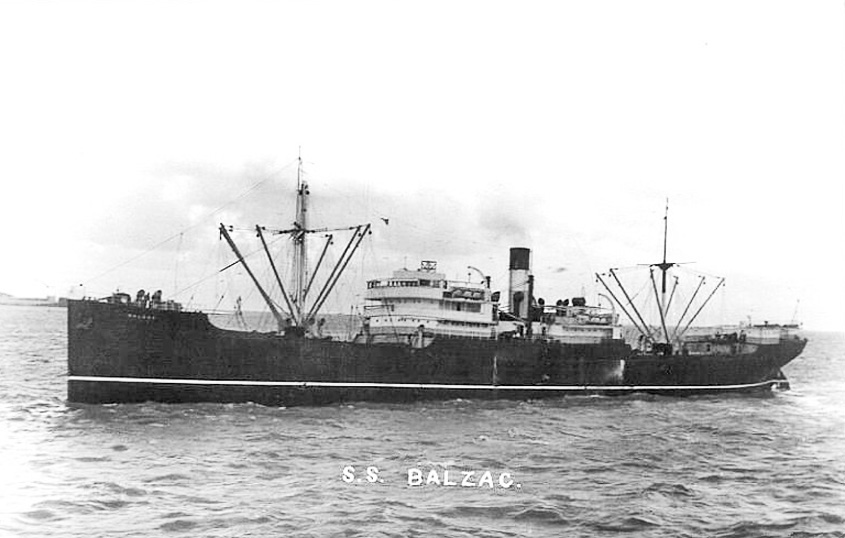
Tidigt under patrullen hittar U-40 en konvoj. i närområdet finns tre mindre fraktfartyg och ett lite större. Det är dagsljus. U-40 anfaller i u-läge på medelavstånd. En G7a mot vardera av de två större av de mindre ( :P ) fartygen, och två mot det största. Alla tre fartygen träffas av en torped vardera. Baron Blythswood på 3700 ton går under, liksom Balzac på 5400 ton. Olinda på 4100 ton skadas bara.
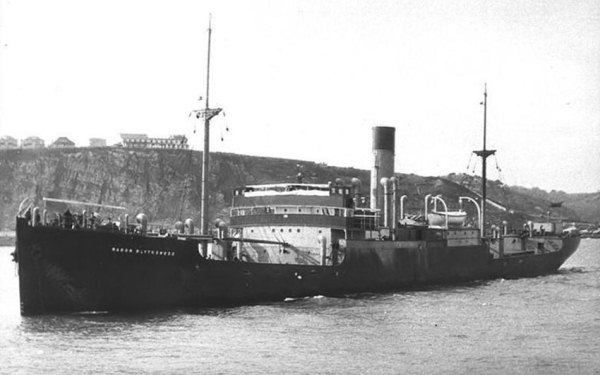


At 04.19 hours on 21 Sep 1940 the Baron Blythswood (Master John Maclarly Robertson Davies) in convoy HX-72 was hit amidships by one G7e torpedo from U-99 and sank within 40 seconds south of Iceland. The master, 33 crew members and one gunner were lost.


Contrary to many U-boat assumptions, the 5,372-ton Balzac was actually sunk by the famous German commerce raider Atlantis, commanded by Bernhard Rogge.

The Attack: Just before dawn, Atlantis surprised the freighter. The Balzac attempted to transmit an "RRRR" wireless distress signal (indicating attack by a surface raider).

The Capitulation: The Atlantis opened fire, shelling the Balzac into submission.

The Rescue & Scuttling: German crewmen boarded the ship and successfully evacuated 47 crew members. Sadly, 3 crewmen died in the engagement. The Germans then used scuttling charges to sink the vessel . The captured survivors were taken aboard Atlantis as prisoners of war.


U-40 upptäcks av konvojens eskort och anfalls med sjunkbomer. 2 träffar som ger lätt skadade besättningsmedlemmar och en utslagen 37 mm lvpjäs. Överkomligt. Därefter undkommer U-50. Chefen beslutar sig för att förfölja konvojen och snart hittar man eftersläntraren Olina, som faktiskt är eskorterad. I mörker avlossas två G7a som avslutar Olinda. Eskorten hittar inte u-50 denna gång.


At 18.07 hours on 18 Feb 1942 the neutral Olinda (Master Jacob Benemond) was stopped by U-432 off Cape Hatteras with a shot across her bow. The crew abandoned ship in two lifeboats and was questioned by the Germans. The vessel was shelled and finally sunk with a coup de grâce at 21.00 hours. The survivors were picked up the next day by USS Dallas.

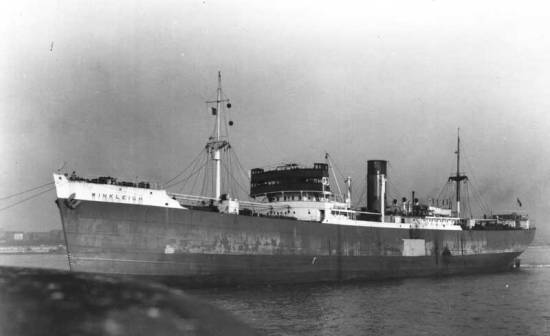
U-40 patrullerar vidare. Ett mindre fraktfartyg, Winkleigh, har oturen att korsa U-50s rutt. Mörker, ytläge, kort håll. 2 st G7a går åt varav en är blindgångare.


At 08.36 hours on 8 Sep 1939 the unescorted Winkleigh (Master Thomas Georgeson) was hit by one torpedo from U-48 and sank southwest of Ireland. At 06.32 hours, the ship had been stopped by a shot across the bow and the crew was ordered to abandon ship after the master came aboard with the papers. The master and 36 crew members were picked up by the Dutch liner Statendam and landed at New York.

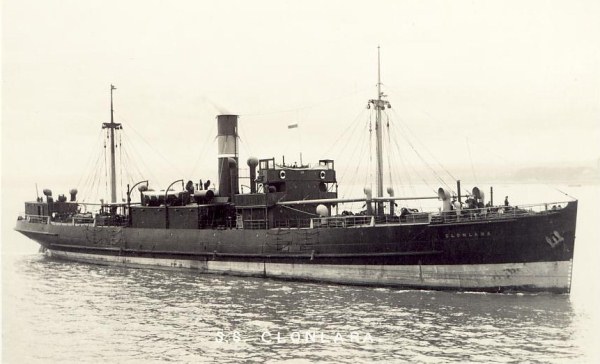
Det är målrika vatten. U-40 träffar strax efteråt på det irländska fartyget Clonlara på 1200 ton. Dagsljus, men oeskorterat. Så ytläge och kort håll. 2 G7a, varav en blindgångare. Det räcker med en träff.


At 23.31 hours on 22 August 1941, U-564 fired a salvo of four torpedoes at convoy OG-71 west of Aveiro, Portugal and observed four different detonations and three columns of fire, later lifeboats were seen. Suhren thought that he had sunk two ships and damaged two others. However, only two ships were hit and sunk, the Empire Oak and Clonlara.

The Clonlara (Master Joseph Reynolds) had picked up 13 survivors from Alva on 19 August. The master, ten crew members and nine survivors were lost. Eight crew members and five survivors were picked up by HMS Campion (K 108) (LtCdr A. Johnson, RNVR) and landed at Gibraltar on 24 August.


Därnäst expedieras Balladier på 3500 ton i dagsljus på kort håll i ytläge. 


At 00.00 hours on 15 August 1942, lookouts on Balladier (Master Ernest G. Hellsten), in the Iceland section of convoy SC-95, spotted U-705 and forced her to dive with 20mm gunfire. With determination, Horn continued to stalk the ship and fired a torpedo at 03.58 hours, which struck on the starboard side at #3 hatch and the engine room. The armed guards (the ship was armed with one 4in, two 20mm and four .30cal guns) had no second chance to fire on the U-boat because she began rapidly to sink with heavy starboard list. She sank within seven minutes about 550 miles southeast of Iceland. The most of the eight officers, 26 men and 11 armed guards abandoned ship in one lifeboat, two rafts and a float.

The American steam merchant Norluna witnessed the attack and in spite of danger rescued the survivors. They left the dead first mate in the lifeboat and two others died on board. In all, three officers, nine crewmen and two armed guards died. On 18 August, the ship arrived in Reykjavik and the Naval authorities expressed surprise because the commanding officer of the escorts had reported the sinking of Balladier and Norluna.


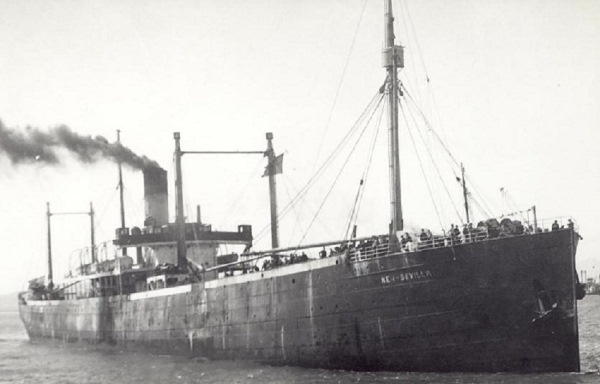
Det här går ju strålande för U-40! patrullen är inte över än utan man snubblar över det eskorterade New Seville på hela 13 000 ton! I mörker på medelavstånd avfyras 2 G7a och 2 G7e från ytläge. Alla träffar! Inga blindgångare. Ouch...


Between 21.20 and 21.26 hours on 20 Sep 1940, U-138 fired torpedoes at convoy OB-216 52 miles northwest of Rathlin Island and reported three ships totalling 20,000 grt sunk. The three ships sunk were New Sevilla, Boka and City of Simla.

The New Sevilla (Master Richard Black Chisholm) was taken in tow, but sank the next day 9 miles from the Mull of Kintyre in 55°48N/07°22W. Two crew members were lost. The master and 22 crew members were picked up by HMS Arabis (K 73) (LtCdr B. Blewitt, RNR) and landed at Liverpool. 44 crew members were picked up by the Icelandic trawler Belgaum and later transferred to the Industria, which had already picked up 215 crew members and landed at Belfast.


U-40 smiter iväg oupptäckt av eskorten.

Härnäst träffar U-40 på en konvoj. Med bara 4 torpeder kvar, och mycket patrull kvar, avstår man från att anfalla utan hoppas på oeskorterade byten för de sista torpederna.

Och mycket riktigt. Snart träffas tankfartyget British Fortitude (8400 ton) på i dagsljus. Det får ta emot alla fyra kvarvarande torpederna, 2 G7a och 2 G7e. Tre träffar och inga blindgångare. Det var det. Träff och sänkt som man säger.

At 22.17 hours on 23 Feb 1943, U-202 fired a spread of four torpedoes at convoy UC-1. The first struck the Murena and the second the British Fortitude, both tankers were able to continue their voyage, though in a damaged condition. The third torpedo failed and the last hit the Empire Norseman, which had already been damaged by U-382 (Juli) and was later sunk by a coup de grâce from U-558 (Krech).

The British Fortitude arrived at Guantanamo on 8 March, was later repaired at Galveston and returned to service in May 1943.


Hemresan till Kiel är lugn och väl i hamn tilldelas chefen riddarkorset för över 100 000 sänkta ton. 8 sänkta fartyg på en patrull. Att ha en typ IX på korta patruller i närområdet är inte så dumt i målrik miljö när ubåtsjaktförmågan ännu är lite begränsad.

Ur spelsynpunkt blir det lätt mekaniskt och repetitivt när det blir många ensamma fartyg utan eskort. Inte så spännande. Hur många torpeder går åt liksom.
#5
Andra världskriget / SV: Replay av GMTs The Hunters
25 augusti 2026 kl. 21:17:43
I december går nästa patrull. Åter till de brittiska öarna. Transitresan är händelselös.

Väl på plats stöter U-40 på det mindre fraktfartyget Vingaland på 2700 ton. Det är mörkt och U-50 anfaller med däckskanonen. Skepparen manövrerar skickligt och Vingaland klarar sig så U-50 får riskera att hjälp anländer för att kunna sänka fartyget. Ingen hjälp anländer dock  och till sist sänks Vingaland.

At 2105 hours on 9th November 1940, the Italian submarine Marconi was informed of a damaged freighter in Italian Grid 5570 requesting a tug. This was the Swedish steamer Vingaland . The submarine altered course to intercept. At 0330 hours on 10th November, she received a signal from Otaria reporting the sighting of an aircraft carrier with three destroyers and, once again, she changed course. At 0545 hours, Marconi sighted a light and closed. It proved to be the vessel mentioned in the first signal, steering North. A torpedo (533mm, S.I.-H type) was fired from 400 metres, but the sea was rough and it deviated to port. A second torpedo was fired from 300 metres which hit amidship and the vessel sank in ten minutes. This was the Swedish Vingaland (2,734 GRT, built 1935) from convoy HX.84 carrying steel to Glasgow. She had been damaged by a Focke Wulf 200 Kondor of I/K.G.40. Six were killed. Nineteen survivors were later rescued by the British Danae II

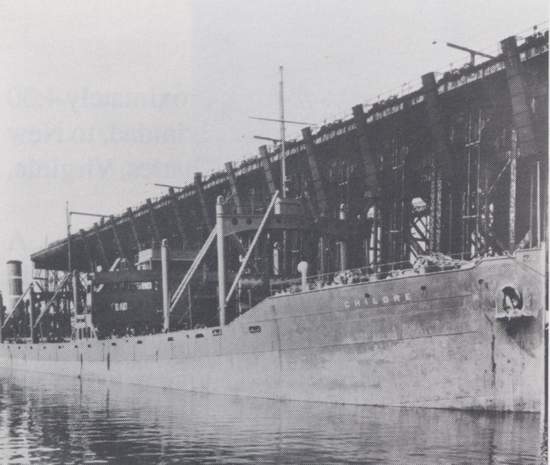
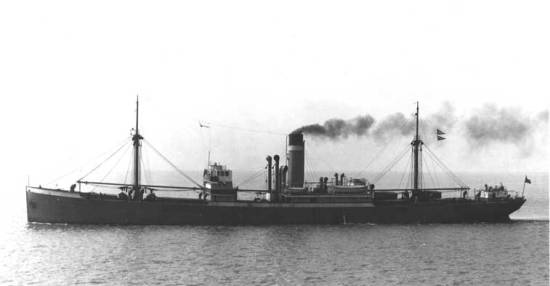
U-40 fortsätter sin patrull och påträffar det större fraktfartyget Chilore på 8300 ton. Det är natt och U-50 anfaller i ytläge på kort håll med 4 G7a torpeder. 2 träffar och Chilore går under.


Between 20.20 and 20.25 hours on 15 July 1942, U-576 fired four torpedoes at convoy KS-520, the first damaged the Chilore, the second damaged the J.A. Mowinckel, the third sank the Bluefields and the fourth missed the second ship. The U-boat was lost after this attack.

The Chilore (Master George P. Moodie) was struck well below the waterline on the port side beneath the port hawse pipe. This reduced the speed to five knots as the forepeak flooded and she dropped out of convoy. The convoy commodore on J.A. Mowinckel joined the Chilore together with USS Spry (PG 64) and decided to head for shoal water to anchor. The commodore was unaware of a defensive US minefield that extended in an arc of ten miles out to sea from Cape Hatteras to two miles out below Ocracoke Inlet. As the ships headed for the mine field, a US Navy blimb dropped smoke bombs to warn the ships, but they thought it was a warning from U-boats in the area. Four hours after the attack, the Chilore struck two mines on the port side wing tanks at the #2 and #4 hatches. After these explosions part of the ship´s complement of eight officers, 33 crewmen and nine armed guards (the ship was armed with one 5in, two .50cal and two .30cal guns) and six passengers tried to abandon ship without orders. Two men fell out of one  boat and drowned. The remaining crew abandoned ship and were picked up by a US Coast guard vessel and landed at Ocracoke. The master stayed on the ship until the next morning.

The Chilore was towed to Hatteras Inlet and was beached. The J.A. Mowinckel was also damaged by US mines but was saved. Later the Chilore was boarded by a US Navy salvage crew and was taken in tow to Norfolk but she capsized and sank near the entrance to Chesapeake Bay on 24 July. Her wreck was sold for scrapping in August 1954.


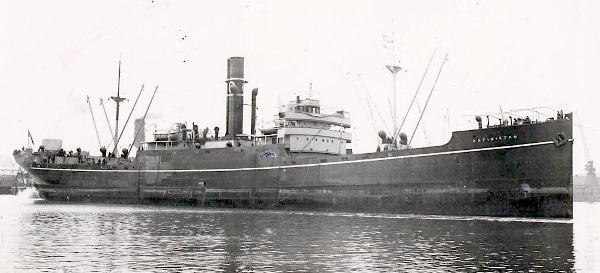
Med humöret i topp fortsätter U-40 och kasserar in Kafiristan på 5000 ton. Mörker, kort håll, ytläge. Ja det blir lite mekaniskt efter ett tag. Det blev däckspjäsen igen när båda avlossade G7a missar.


At 15.55 hours on 17 Sep 1939 the unescorted Kafiristan (Master John Busby) was torpedoed by U-53 about 350 miles west of Cape Clear. The ship had been missed by a first torpedo at 15.42 hours and was sunk by a coup de grâce at 16.14 hours. Six crew members were lost. The master and 28 crew members were picked up by the American merchant American Farmer and landed at New York.

U-40 har "flow" och fortsätter! Nu möter man Reedpool på 4800 ton. Det är dagsljus, men fartyget är oeskorterat. Tja, ytläge och kort håll. 2 G7a som båda träffar, men båda är blindgångare. Ingen fara! Däckspjäsen fullföljer jobbet.

At 08.15 hours on 20 September 1942 the unescorted Reedpool (Master William James Downs) was torpedoed by U-515 about 240 miles southeast of Trinidad and sank after being hit by a coup de grâce at 08.38 hours. Six crew members were lost. The master was taken prisoner, landed at Lorient on 14 October and taken to the POW camp Marlag und Milag Nord. 30 crew members, four gunners and 16 survivors from Medon were picked up by the British schooner Millie M. Masher (Master F. Barnes) on 21 September and landed at Georgetown, British Guiana.

On 13 September the Reedpool had picked up the second officer and 15 survivors from the British motor merchant Medon, which had been sunk by the Italian submarine Reginaldo Giuliani (Bruno) northeast of Para on 10 August.


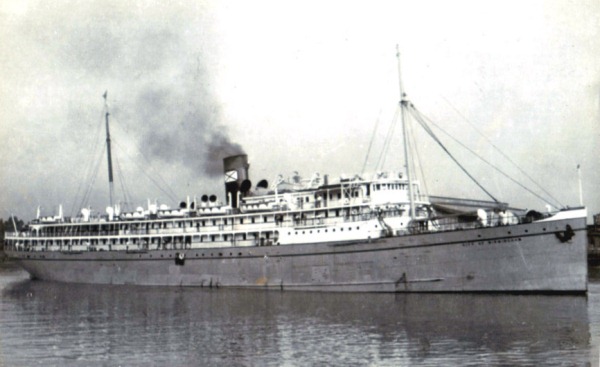
City of Birmingham på 5900 ton är nästa olyckliga fartyg. Det är mörkt. U-40 kör på kort håll i ytläge och avlossar 4 G7a, varav 3 träffar, men två är blindgångare. Åter får däckspjäsen avsluta. Och där gick de sista 10,5 cm granaterna!


On 1 July 1942 the City of Birmingham (Master Lewis P. Borum) was en route to Bermuda at 11 knots about 250 miles east of Cape Hatteras, escorted by USS Stansbury which took station a mile distant. At 01.27 hours, just after the escort ship had signaled by flags and blinkers for a change of course, two torpedoes from U-202 hit the City of Birmingham in quick succession on the port side and another was seen passing ahead of the ship. The first torpedo struck about 100 feet abaft the bow in the #1 hatch and the second under the bridge. The second hit caused all the sections in the forward part of the ship to flood. She quickly listed 45° to port and sank within five minutes. Most of the ten officers, 103 crewmen, five armed guards (the ship was armed with one 4in and two .30cal guns) and 263 passengers on board abandoned ship in an orderly fashion in five lifeboats, five rafts and seven floats. The armed guards left last and jumped into the water. The survivors were picked up by USS Stansbury within two hours after she had dropped depth charges to chase away the U-boat. Five crewmen, one stewardess and two passengers were lost and one of the crew later died on board the escort.

During the First World  War, Lewis P. Borum was master of the City of Memphis, which was torpedoed and sunk by UC-66 (Pustkuchen) south of Fastnet on 17 March 1917.


Patrullen närmar sig sitt slut, och U-40 möter potentiellt motstånd första gången denna patrull. City of Oxford på 2600 ton är faktiskt eskorterat. U-40 anfaller i mörker på medelavstånd i u-läge med 4 st G7a varav två träffar utan blindgångare. Det räcker. Eskorten hittar inte U-40 som avslutar patrullen och återgår till Kiel.


Between 04.32 and 04.34 hours on 15 June 1942, U-552 fired three torpedoes at convoy HG-84 west of Cape Finisterre, observed hits after 45 seconds and 1 minute 32 seconds and heard a detonation after 1 minute and 55 seconds. Two ships, the City of Oxford and the Thurso were hit and sunk.

One crew member from the City of Oxford (Master Alfred Norbury) was lost. The master, 36 crew members and six gunners were picked up by the British rescue ship Copeland, transferred to HMS Marigold , transferred to HMS Stork and landed at Liverpool.


Under resan upptäcks ett ubåtsjaktflygplan i tid så U-40 dyker och undgår anfall.

En lyckad patrull! 5 sänkta fartyg och totalt nästan 30 000 ton.
#6


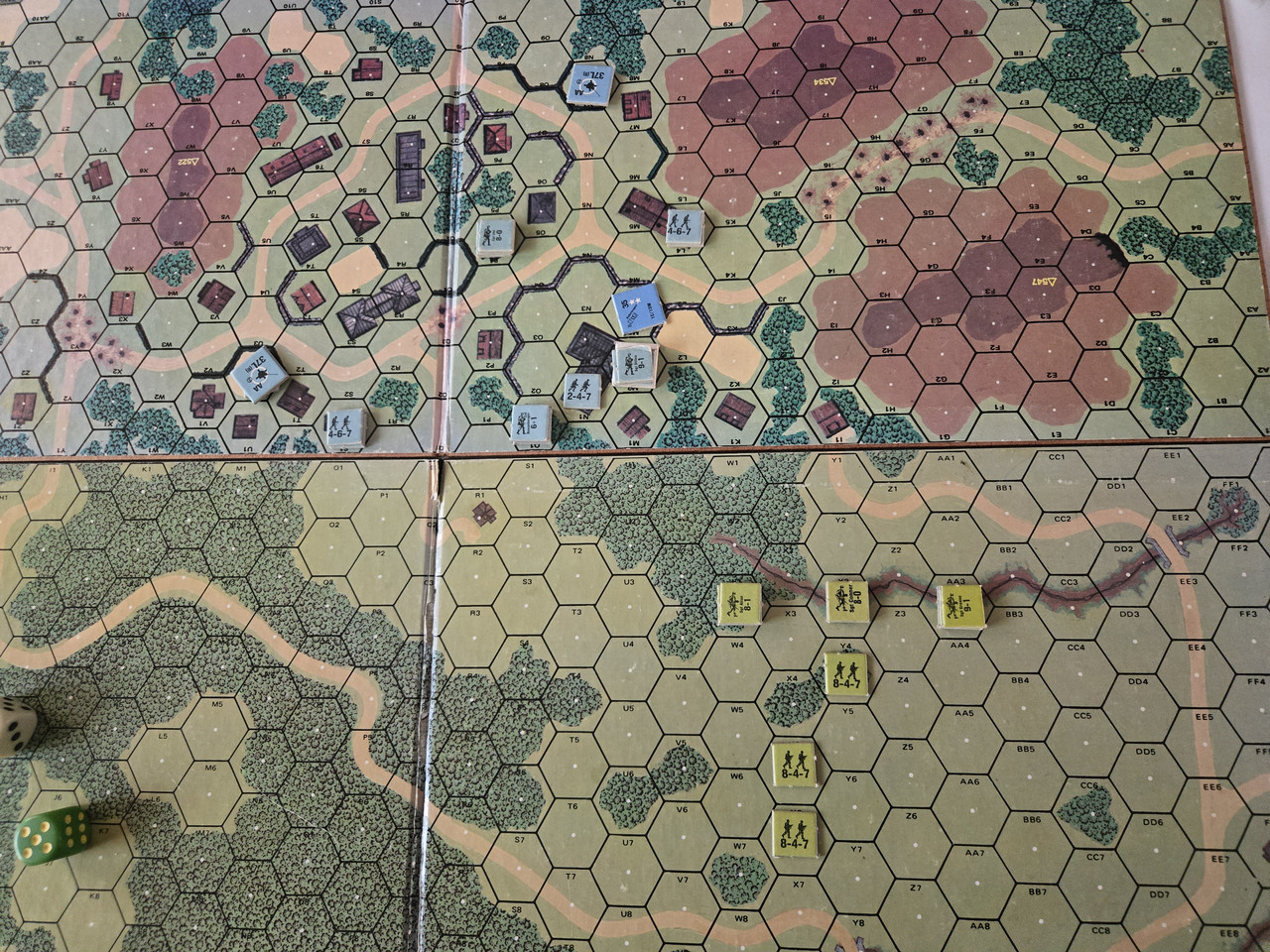
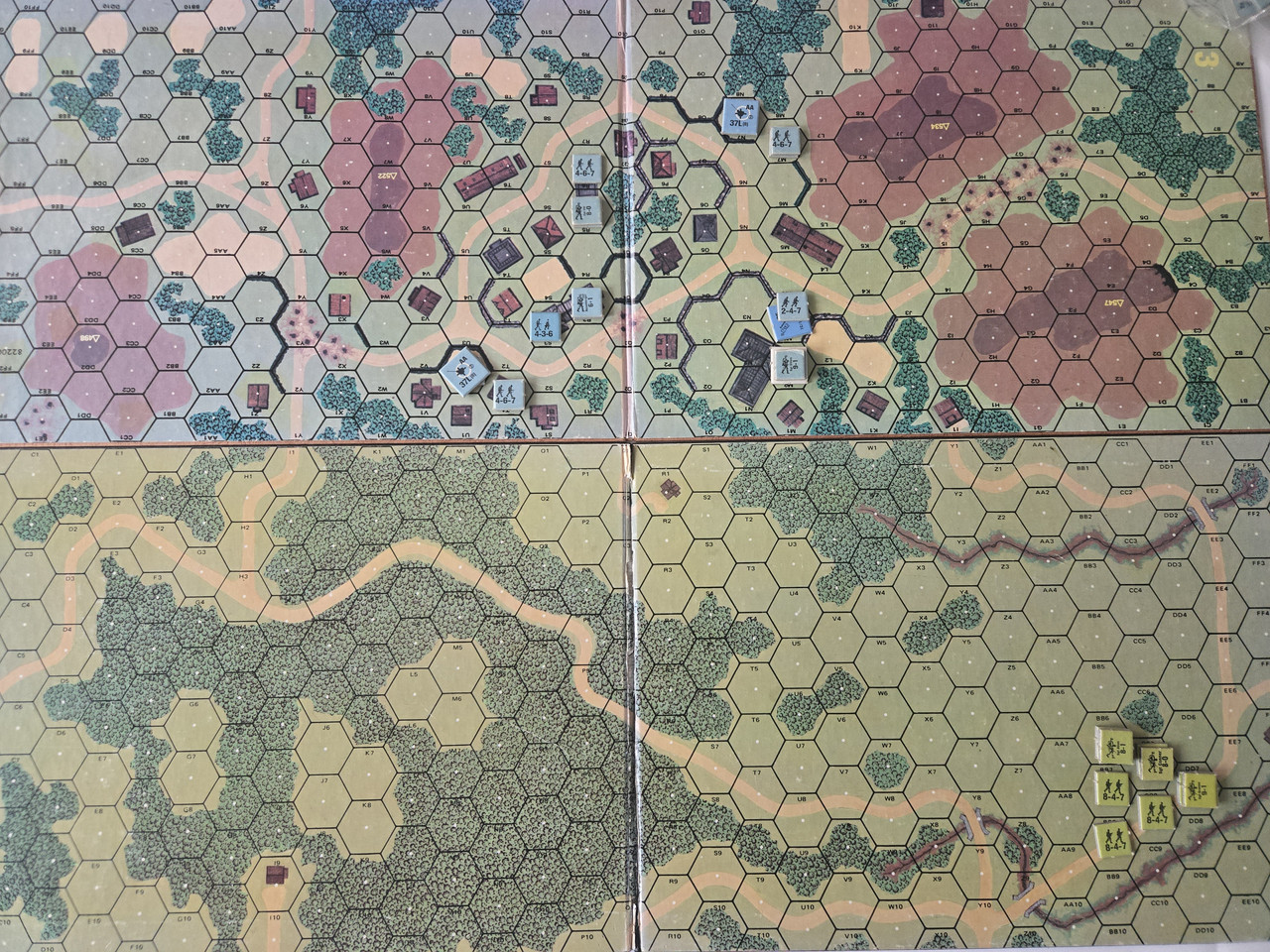
Amerikanerna börjar framryckningen mot målet. Tyskarna i flervåningshuset öppnar eld, men utan i spelet synlig verkan.
#7
Andra världskriget / SV: Replay av GMTs The Hunters
24 augusti 2026 kl. 19:20:59
September 1939. U-40 lämnar Kiel och stävar mot de brittiska öarna dit man anländer händelselöst. Typ IX-ubåtarna har stor uthållighet med mycket bränsle och många torpeder jämfört med typ VII modellerna, det är ju en långräckviddsmodell, så den kan patrullera dubbelt så länge runt de brittiska öarna som en typ VII u-båt. det blir många möjliga skottillfällen.

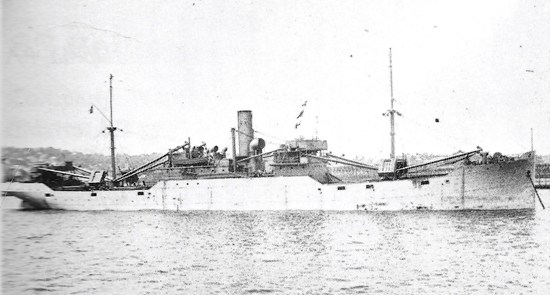
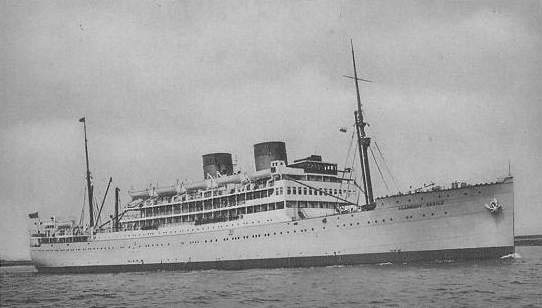
Det börjar med att ett ensamt större fraktfartyyg påträffas, Llangibbey Castle på hela 12 000 ton! I vår tidigare karriär skadades det fartyget av U-50 i april 1940. I denna parallella verklighet anfaller U-40 i mörker, på kort håll, i ytläge och skjuter 3 st G7a varav två träffar och fungerar. Det är inga bra träffar, så U-50 avslutar med däckskanonen. Bra början på karriären!


Completed in November 1929 as motor passenger ship Llangibby Castle for Union-Castle Mail SS Co Ltd, London. In July 1940 requisitioned as troop transport after a voyage from Capetown to Falmouth and carried troops to South and East Africa. In the night on 21/22 December 1940, damaged during an air raid in Liverpool.

On 6 April, the Llangibby Castle left Gibraltar under escort after temporary repairs, but still without rudder, for the UK, arriving on 13 April. Altogether she sailed 3400 miles without a rudder and with a badly damaged stern, only using her engines for steering, a feat for which her master was awarded the CBE and the chief officer and chief engineer officer the OBE and Lloyds  War Medal for bravery at sea.

At 11.15 hours on 16 January 1942 the Llangibby Castle (Master Ronald Frederick Bayer) in convoy WS-15 was torpedoed by U-402 north of the Azores. One torpedo hit the stern and blew away the after gun and the rudder, but the propellers remained intact. 26 of the troops aboard as passengers were killed by the explosion. The crew of 184 men and eight gunners managed to get the ship underway at 9 knots to Horta in the Azores, fighting off attacks by German Fw200 aircraft on the way, assisted by volunteers from the troops who manned anti-aircraft guns. The neutral Portugal allowed only 14 days for repairs and on 2 February, the ship had to left with the troops still on board and set course to Gibraltar, assisted by the rescue tug HMS Thames and escorted by the three destroyers HMS Westcott (D 47) (Cdr I.H. Bockett-Pugh, RN), HMS Exmoor (L 08) (LtCdr L.St.G. Rich, RN) and HMS Croome (L 62) (LtCdr J.D. Hayes, RN). On 3 February, the small convoy was followed by several U-boats, but none managed to hit the ship, while HMS Westcott sank U-581 (Pfeifer). On 8 February the troopship arrived at Gibraltar in tow of the tug and disembarked the troops.

On 9 November 1942 the Llangibby Castle was part of the KMF-convoy in Operation Torch, the landing in North Africa. She was hit by an 8in shell from a Vichy-French shore battery which killed one person. In 1943 the ship returned to the UK for repairs to her bow, which had been damaged at Gibraltar during the preparations for the Italian landings. At the same time, she was converted into a Landing Ship Infantry (LSI) equipped with 18 landing craft and able to carry 1590 troops. After making exercises at Loch Fyne, she spent the next six months ferrying troops in the Mediterranean. In 1944 HMS Llangibby Castle was allotted to Force J3 (Juno beach) for the Normandy landings, based at Southampton. She practiced the landings at Bracklesham Bay. On 6 June, she landed the first wave of 750 Canadian troops at Coirseilles, loosing ten of her landing craft, which swamped on the return trip with the loss of 12 lives. The second wave of 750 men had to be landed by the remaining landing craft, which had to make two trips. After nine hours, the ship returned to Southampton. She later landed troops at the Omaha and Utah beaches and also at Le Havre, in all she made over 70 crossings and carried over 100,000 troops. In 1945, the ship was converted back to a troop transport and carried out trooping duties in the Far East.

Post-war:
In January 1946 the Llangibby Castle made three voyages repatriating some 6000 West African troops from Burma and India including the total internees of a military prison. In January 1947 returned to the owner, after having sailed 300,256 miles and carrying 156,134 troops and resumed her service after a refit. On 29 Jun 1954, she sailed from Tilbury to Newport in Monmouthshire where she was broken up by J. Cashmore in July 1954.

Patrullen fortsätter och det mindre Torny på 1200 ton anfalls i mörker, på kort håll i ytläge med däckskanonen. Det räcker. Typ IX har en 10,5 cm däckskanon som är markbart kraftigare än typ VII 8,8 cm.

At 14.45 hours on 8 May 1942 the unescorted Torny (Master Harald Østerbø) was hit on the starboard side by one torpedo from U-507 in the Gulf of Mexico. The torpedo struck near the fire room, killing two men on watch below, destroying the starboard lifeboat and blowing away a part of the bridge and the cabin of the captain. The crew abandoned ship in the port lifeboat and a motorboat as the ship settled immediately by the bow after hold #2 was flooded. The lifeboat with 15 men was pulled toward the still running propeller and most of the occupants jumped overboard, but just then the ship sank three minutes after being hit and pulled them under while the  boat missed the propeller by six inches. However, all men swimming in the water could be rescued by the  boats. The Germans questioned the survivors and searched the area before leaving. The motorboat took the lifeboat in tow and headed north, but less than three hours after the sinking an US Army aircraft located the boats and ordered them to steer east. About one hour later, the survivors were picked up by two seaplanes and brought to the Naval Air Station in Pensacola, Florida.

Moralen är god och patruller fortsätter! En konvoj i dagsljus. Fyra mindre fraktfartyg, men ganska stora i den klassen, i närheten av U-50 som anfaller i U-läge på långt håll (oväntat defensivt). 4 G7a som alla missar... U-50 upptäcks inte och förföljer konvojen. Vid nästa anfallstillfälle har man två större och ett mindre fraktfartyg och ett tankfartyg som mål. 4 G7a avfyras på medel avstånd varav tre mot tankfartyget som är aningen större än de större fraktfartygen. Tankfartyget, British Grenadier på 6900 ton, träffas av alla tre torpeder varav en är blindgångare. Det räcker inte för att sänka fartyget. U-50 upptäcks av eskorten som drar in en träff med sjunkbomber. vattenintag. U-50 manövrerar, men kommer inte undan. Två träffar till! Båda ger vattenintag. U-50 går ner på stort djup och lyckas undkomma.

Beslutet blir att förfölja konvojen och hoppas att man kommer åt British Grenadier som nu är långsam. Det visar sig stämma, och målet har övergivits av konvoj och eskort och är ensamt. Det får nådastöten i mörker med 3 G7a som alla träffar från ytläge på kort håll.


At 22.52 hours on 22 May 1941 the unescorted British Grenadier (Master Henry George Jeary) was hit amidships by one torpedo from U-103 while steaming on a zigzag course southwest of Freetown, Liberia. The ship stopped and was then hit amidships by a coup de grâce, but remained afloat. At 23.59 hours, the U-boat fired a second coup de grâce that hit in the engine room, causing the tanker to settled slowly by the stern. The British Grenadier was left in a sinking condition and later foundered . The master, 22 crew members and two gunners were picked up by the Ganda and 24 crew members were rescued by the Spanish tanker Jose Calvo Sotelo and landed at Freetown.

U-50 har patrullerat klart för denna gång och med tre sänkta fartyg på totalt 20 100 ton har man fått en bra start.
#8
Shopping / SV: Bortskänkes
24 augusti 2026 kl. 15:54:55
Där finns ju flera intressanta spel! Som jag redan har...
#9


Utgångsläget. Nog borde väl tyskarna på andra våningen i flervåningshuset ha fri sikt till de jänkarna?
#10
Citat från: aegneus skrivet 20 augusti 2026 kl. 23:30:03Väldigt intressant att se - vi fick ALDRIG till den här sortens tyska framgångar, så jag undrar vad vi spelade fel. Nu har vårt spel lämnat oss, så jag kommer nog aldrig prova igen (OK, vassal finns). Men lite lust finns det!

(Och så jag tycker fortfarande att klassiska SPI-färger är väldigt fina, det är ett snyggt spel. Men det är ju bara en åsikt om konst.)

Min bror bor i Kungsbacka. Vill ni låna spelet går det nog att fixa.
#11
Krigsspel / SV: [NOMINIERING]: 5 bästa spel - AH
20 augusti 2026 kl. 19:14:03
Citat från: P-O Jönsson skrivet 20 augusti 2026 kl. 12:26:08Höll på att glömma!

Gunslinger (fantastiskt festligt fartfyllt spel! Vann Sundsvallmästerskapen 1984, vilket det rapporterades i ett nummer av AH GEneral!)

Oooooooh! Spelet jag alltid ville ha utan att veta varför!
#12
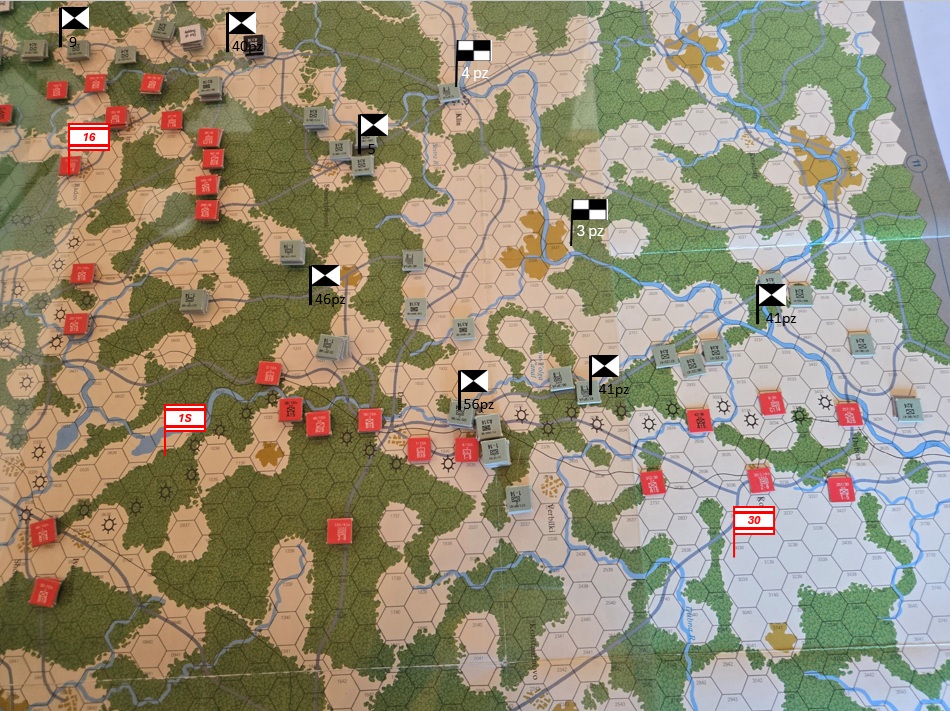
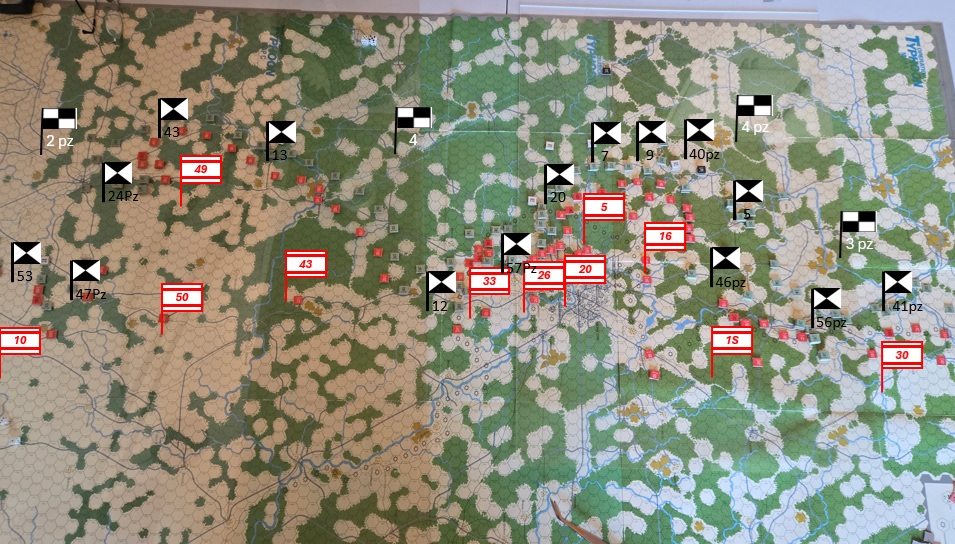
Sista GT blir det kallt och snö igen. Huvuddelen av de tyska anfallen misslyckas, men 57 tar Polotsk. Läget förändras nästan inte alls så inga bilder redovisas.

Jaha. Tysken har 55 VP vilket skulle ge tactical victory om han valt den historiska planen att ta Moskva den med direkt metod. Om han valt att söka inringa Moskva räcker det också för sgere, men då måste han dessutom ha inringat staden, vilket han inte gjort även om det är på G. Om det skulle kunnat slutföras med tilltagande risk för snö, mer ryska förstärkningar och sämre logistik är ytterst tveksamt.

Han hade valt att söka inringa Moskva. Alltså rysk seger. Att fortsätta 15 GT till skulle sannolikt leda till att kartan rensas på tyskar och de krossas totalt givet reglerna för snö och avsaknad av regler för tyska motståndsnästen. Reglerna verkar helt skrivna för den tyska offensiven och inte alls för den ryska motoffensiven. Man har förefaller bara ha förlängt spelet och lagt till förstärkningarna som anlände, men inte tagit hänsyn till hur hårda tyskarna faktiskt var i försvarstriderna. De drevs av kartan som täcks i spelet ja, men de krossades alls inte. Det märks ju i utgångsläget i nästa spel, Red Typhoon.

Hur kan man jämföra detta med GMTs Typhoon då?

Att börja spelet den 15 november är ju udda. Naturligare är ju att starta vid operationens början i oktober, men då funkar inte vald kart-, förbands- och tidskala.

Logistikmekaniken är enklare och mer abstrakt. Vilket kanske gör att den bättre simulerar hur en högre chef prioriterar och inte går ner i hur prioriteringarna verkställs, men man tappar samtidigt lite känslan för problemen i genomförandet av prioriteringarna. 

Flyget är enkelt och abstarkt. För enkelt. Det blir väldigt mekaniskt där ryssen defensivt kontrar tyskens offensiva prioriteringar. GMTs spel med flygförband med olika typer av flygplan och uppdrag , lv-eld, luftstrider etc, ger en helt annan känsla och är mycket roligare. Men det funkar väl. Så där i alla fall.

Bortrationaliseringen av alla förstärkningsförband, ja rent av alla funktionsförband som artilleri, ingenjörer, stormkanoner, pv-förband etc etc gör ju att det blir svårare att kraftsamla i ordet rätta bemärkelse. Kraftsamling är ju mycket mer än samling av manöverförband (folksamling). Samtidigt så skildra det kanske hur en högre chef tänker bättre. Denne tänker i större manöverförband. GMTs Typhoon låter ju spelaren spela flera ledningsnivåer samtidigt. SPIs operation Typhoon fokuserar mer, men inte uteslutande (då hade ju brickorna varit kårer och spelet mycket mindre) på högre ledningsnivåers övergripande resursfördelning.

I GMTs system skildras pansardiv med två motoriserade infreg och ett stridsvagnsreg. Vart och ett av dessa består av två bataljoner. I SPIs Operation Typhoon av två motoriserade inf reg och två stridsvagnsbataljoner. Stridsvagnsregementet är alltså splittat i två bataljonsbrickor snarare än en regementsbricka. Kopplat till att i SPIs spel kan man stacka en division i en hex, men bara ett regemente kan anfalla ur den (men man får samlad divisionsbonus ändå). detta gör att att optimal fördelning är att divisionen anfaller med ett motoriserat regemente från vardera en hex mot samma mål för maximala styrkepoäng och divisionsbonus. Det är naturligt givet skillnaden i kartskala. men det innebär att tysken uppmuntras att använda den historiska ofta använda stridsindelningen där varje motoriserat regemente underställdes en stridsvagnsbataljon. Detta ger flexibilitet i hur divisionsbonus och kombinerade vapenbonusen tillämpas (1 tabell höger per stridsvansbataljon som deltar). Detta är faktiskt bättre, och kostar en bricka till per pansardivision. Å andra sidan har inte SPIs spel med pansardivisionernas spaningsbataljoner alls, vilka var en viktig del i förbandens strid.

SPIs Operation Typhoon har, likt Battles for the Ardennes, åldrats med viss värdighet. Det fungerar (om än inte the extended campaign). Men GMTs Typhoons är sammantaget överlägset på många sätt. Och större. Och mer komplext. Det gör att det inte är helt garanterat att jag återkommer till GMTs spel före SPIs, även om jag ändå föredrar det av många skäl. Det kräver mycket mer. Det ger mycket mer. Men oj vad man binder upp sig!
#13


Fortatt blidväder.

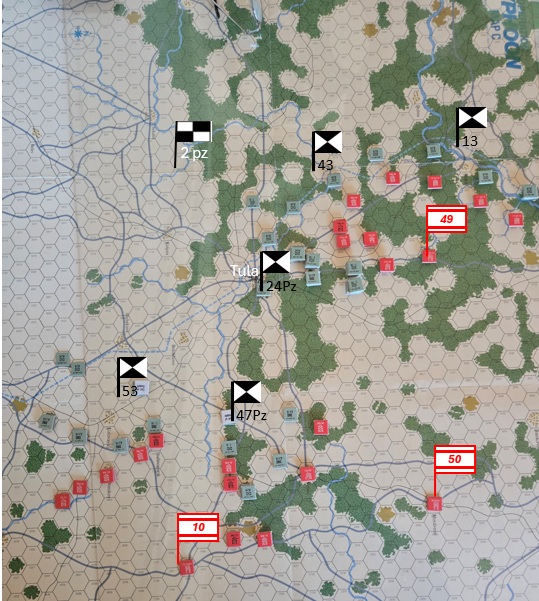
24 pansar fortsätter anfalla 49 armén i syfte att slå så många förband man kan. Framgångar uppnås och 49 backar. 10 armén tar upp ett hål i den tyska linjens center. Som tur är så anländer två regementen ut en infdiv till 53 kåren.


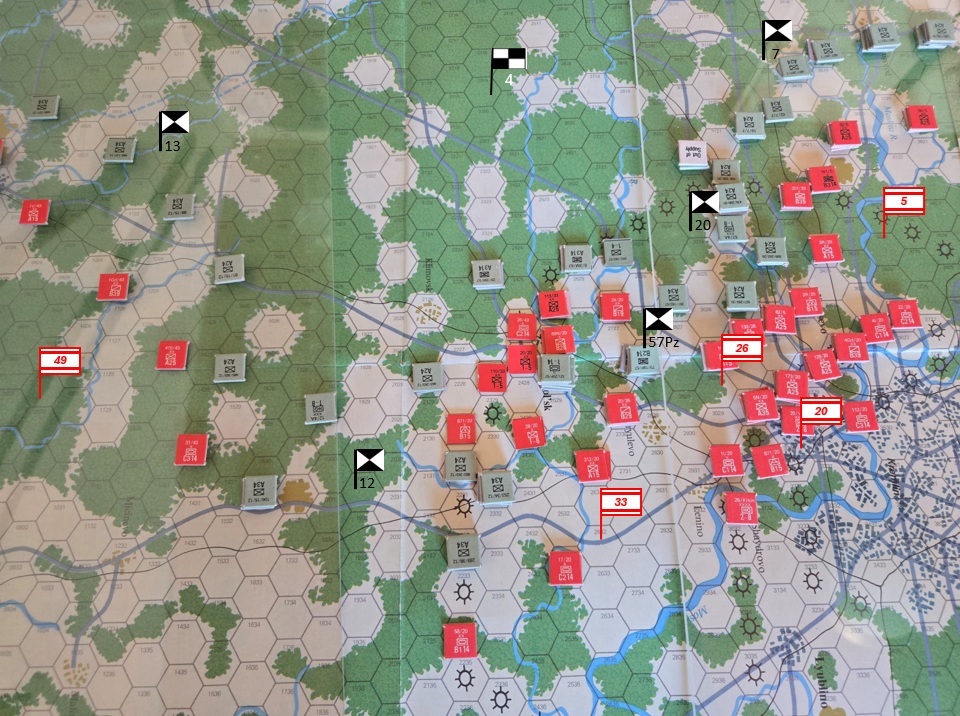
12 fortsätter sakta ta sig framåt. 57 ändrar anfallsriktning och anfaller söderut mot Polotsk, och når stadens utkanter från ett oväntat håll. Det ryska försvaret söder och väster om staden nästan skärs av. Lokalt dåligt, men det innebär att tysken faktiskt gett upp att fortsätta in i Moskva. Vilket kanske är klokt.


40 pansarkåren anfaller på nytt, men når bara begränsade framgångar till hög kostnad. 46 pansar däremot gasar på söderut mot Moskva från norr. Även 56 och delar av 41 anfaller söderut och får framgång mot 1 shocks främsta delar.

Nedan en överblick.

#14
Andra världskriget / SV: Replay av GMTs The Hunters
19 augusti 2026 kl. 20:45:49
U-40 väljs slumpmässigt som den långräckviddiga typ IXa ubåt som vi ska spela härnäst. Det visar sig vara ett tveksamt val om det historiska utfallet ska tolkas som ett omen.

As one of the eight original Type IX submarines, later designated IXA, U-40 had a displacement of 1,032 tonnes when at the surface and 1,153 tonnes while submerged. The U-boat had a total length of 76.50 m, a pressure hull length of 58.75 m, a beam of 6.51 m , a height of 9.40 m , and a draught of 4.70 m. The submarine was powered by two MAN M 9 V 40/46 supercharged four-stroke, nine-cylinder diesel engines producing a total of 4,400 metric horsepower for use while surfaced, two Siemens-Schuckert 2 GU 345/34 double-acting electric motors producing a total of 1,000 metric horsepower for use while submerged. She had two shafts and two 1.92 m propellers. The boat was capable of operating at depths of up to 230 metres.

The submarine had a maximum surface speed of 18.2 knots (33.7 km/h; 20.9 mph) and a maximum submerged speed of 7.7 knots (14.3 km/h). When submerged, the boat could operate for 65–78 nautical miles (120–144 km) at 4 knots (7.4 km/h); when surfaced, she could travel 10,500 nautical miles (19,400 km) at 10 knots (19 km/h). U-40 was fitted with six 53.3 cm torpedo tubes (four fitted at the bow and two at the stern), 22 torpedoes, one 10.5 cm naval gun, 180 rounds, and a 3.7 cm as well as a 2 cm anti-aircraft gun. The boat had a complement of forty-eight sailors.

Service history
U-40 was ordered by the Kriegsmarine on 29 July 1936 (as part of Plan Z and in violation of the Treaty of Versailles). Her kneel was laid down on 1 July 1937. U-40 was launched on 9 November 1938 and commissioned on 11 February 1939 under the command of Kapitänleutnant Werner von Schmidt.

After being commissioned and deployed, U-40 was stationed in the German port city of Wilhelmshaven, which to be her home for the rest of her fairly short service life.

Patrols
U-40 left Wilhelmshaven on 19 August 1939, before World War II began, for her first patrol. For nearly four weeks she operated off the coast of Gibraltar, before returning home on 18 September that same year. U-40 would once again leave Wilhelmshaven, this time under the command of Kapitänleutnant Wolfgang Barten, on 10 October 1939. During this patrol, she was to conduct joint operations off the coasts of Portugal and Spain.

Fate
On 13 October 1939, U-40 was sunk by a British mine. She was to operate as part of the first pack of U-boats in World War II; however, because she left port late, Barten decided to take a shortcut to the U-boat's designated meeting point, southwest of Ireland. This shortcut was through the English Channel, which was festooned with many British naval mines. Choosing to make the voyage nearly three and a half hours after high tide, the mines were not at their lowest point. The boat struck one of these devices and sank immediately to the sea floor. Nevertheless, nine crew members were able to exit through the aft escape hatch. Using escape equipment, they were able to reach the surface; one of the nine died on his journey. Once there, five more died from exposure to the harsh elements of the English Channel. Nearly ten hours after the sinking, the remaining three men were rescued and taken prisoner by HMS Boreas.


#15


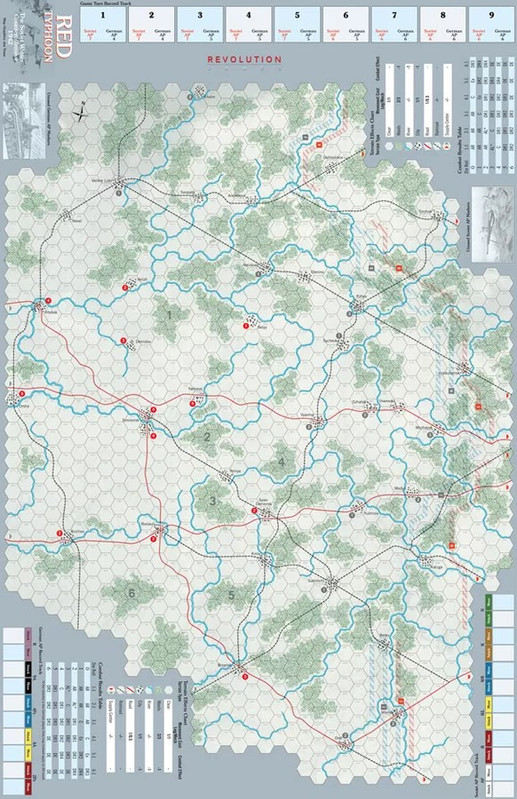
Kartan. Täcker från Vitebsk och Velikiye Luki i nordväst till Orel i sydost. Moskva ligger strax utanför öster kartkant. Tula är utanför kartan, men Kaluga ligger nära kartkanten. Inget estetiskt fel på kartan tycker jag.


Brickor. Också helt OK.